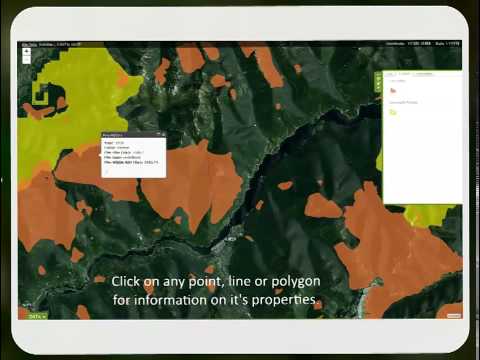
 Digital Basin Quick Start

On average, Basin-Boundary municipalities spend 11.3% of their total budget on expenses related to parks, recreation and culture–slightly lower than the average of all BC municipalities. Spending on parks, recreation and culture, relative to other expenses, has generally increased over time. For our full discussion of trends and conditions related to local government … [More]
Report Explores Settlement Services across Western Provinces
July 17, 2015
New research led by the Rural Development Institute (RDI) at Brandon University (BU) explores settlement services available to newcomers in 29 rural areas and centres across Western Canada (British Columbia, Alberta, Saskatchewan, and Manitoba). The project, entitled Immigration Settlement Services and Gaps in Citizenship and Immigration Canada’s Western Region, inventoried … [More]
Almost $2.5 Million Invested in Heritage Over 5-Year Period
April 15, 2015
The preservation of heritage contributes to cultural well-being, as heritage may have aesthetic, historic, scientific, cultural, social, economic, and spiritual significance. Investment in heritage is an indicator of an area’s commitment to preserving tangible cultural heritage (such as buildings, monuments, books, artifacts, and works of art), intangible cultural heritage … [More]
Spending on Recreation & Culture Has Increased Over Time
August 10, 2013
The trend over the past 27 years is similar in our region as compared to all municipalities in BC (Figure 1). The average of total spending for Basin Boundary local governments from 1985 to 2011 was 11.2% while the average for all BC municipalities was 11.5%. Municipal spending on parks, recreation and culture has increased over time, peaking in 2008 (16.5% for all BC and … [More]
Over 60 Languages are Spoken in Our Region
June 2, 2013
The majority (96.7%) of Basin Boundary residents speak English most often at home. The proportion of Basin Boundary residents speaking French most often at home (0.5%) is similar to British Columbia (0.4%), but is much lower than Canada (20.6%). Our region has a much lower percentage of people who speak other languages most often at home—only 2.9% compared to BC (19.1%) and … [More]

 Basin-Boundary Agricultural Planning: The Regional Perspective